
A bookcase is not just a piece of furniture. It has been part of the history of knowledge since ancient times.
Before becoming a decorative feature, it was a tool for preservation. Understanding its evolution helps us make a better choice today when selecting a bookcase or display cabinet made of solid wood.
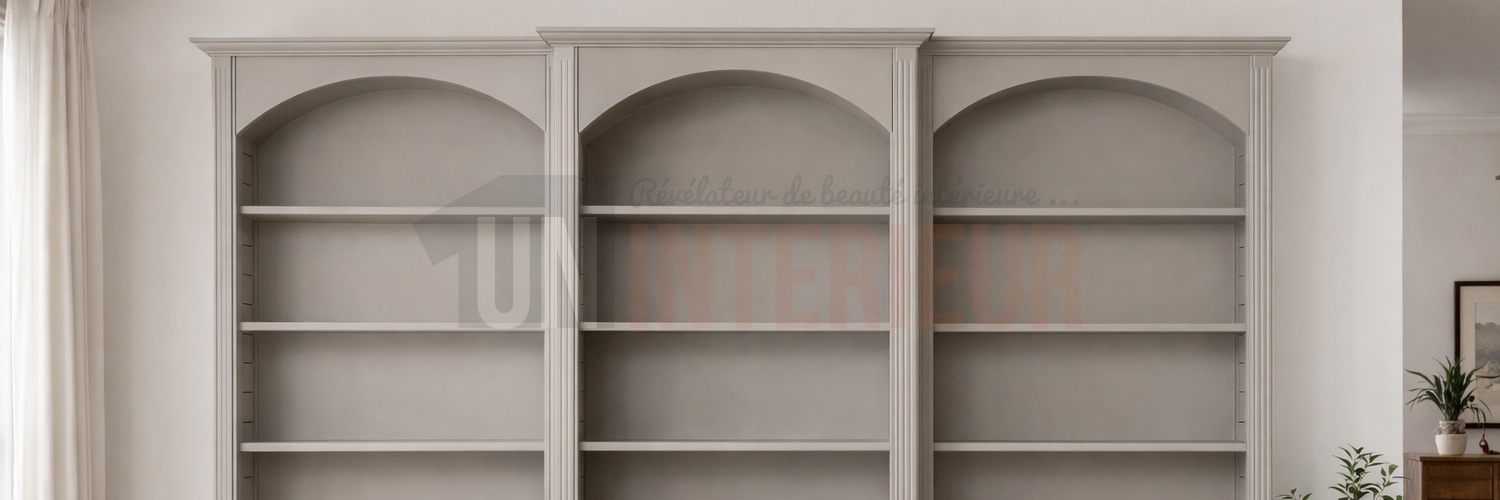
1. The first bookcases: preservation before display
In ancient times, texts were preserved in the form of scrolls. The earliest bookcases were not open units as we know them today, but spaces dedicated to preservation.
In the Middle Ages, precious manuscripts were stored in locked cabinets. The priority was protection against damp, dust and theft.
The doors therefore served an essential purpose: to preserve the contents.
2. Renaissance and Classical Age: furniture becomes architectural
From the Renaissance onwards, the bookcase became a defining feature of interior architecture. Solid wood shelving was installed along the walls.
Oak, robust and durable, was widely used for its strength and ability to support the weight of the books.
It was also during this period that elaborate decorative features began to appear: mouldings, cornices and frames. The bookcase became a symbol of culture and status.
3. The 18th and 19th centuries: display cabinets and ladders
As the number of printed books increased, libraries grew in size.
Wooden display cabinets appeared to protect books from dust whilst keeping them visible. Glass-fronted doors became a compromise between preservation and display.
The great heights sometimes necessitated the use of ladders. The bookcase was no longer merely a piece of furniture; it became an organised wall.
4. The modern bookcase: functionality and personalisation
Today, the bookcase is no longer reserved for books. It holds decorative objects, souvenirs and collections.
Solid wood remains a preferred choice for its strength and ability to stand the test of time.
A solid pine bookcase creates a bright and warm atmosphere. A solid oak bookcase offers a more substantial presence and superior resistance to heavy loads.
5. The historical utility of doors, drawers and decorative features
Doors
Historically, doors protected precious books. Today, they help keep dust out and visually organise the space.
A wooden display cabinet combines protection with showcasing. It is particularly suitable for fragile items or special editions.
Drawers
Drawers have long been used to store correspondence, documents and maps.
When incorporated into a contemporary bookcase, they allow you to store items that should not remain visible whilst maintaining aesthetic coherence.
Ornate decorations
Mouldings, cornices and frames served a symbolic as well as an aesthetic purpose. They affirmed the owner’s status and gave the furniture an architectural dimension.
Today, more elaborate detailing adds character. A more streamlined design will suit a contemporary interior.
6. Tips for choosing your bookcase today
Drawing inspiration from history does not mean copying the past, but understanding the essential functions of the furniture.
- Choose adjustable shelves to adapt the heights to modern formats
- Opt for sturdy brackets, ideally made of solid wood
- Consider the practical use of doors or display cabinets
- Include drawers if you want discreet storage
If your project involves an entire wall or a specific height, it is often worth requesting a bespoke quote for a solid wood bookcase.
A bespoke project allows you to tailor dimensions, finishes and internal organisation with precision. You can also request a personalised quote for your bespoke bookcase to ensure a perfectly integrated result.
Conclusion
The bookcase has stood the test of time, evolving with changing uses. From a simple storage unit, it has become an architectural and decorative feature.
Choosing a solid wood bookcase today, whether in solid pine or solid oak, is to be part of this tradition.
Discover our designs and inspiration in our section dedicated to solid wood bookcases and display cabinets.
© Uninterieur - Original content protected by copyright. Any reproduction, in whole or in part, without prior written permission is strictly prohibited.